

Events



Videos
Historical Spotlight
View Spotlight
Battle
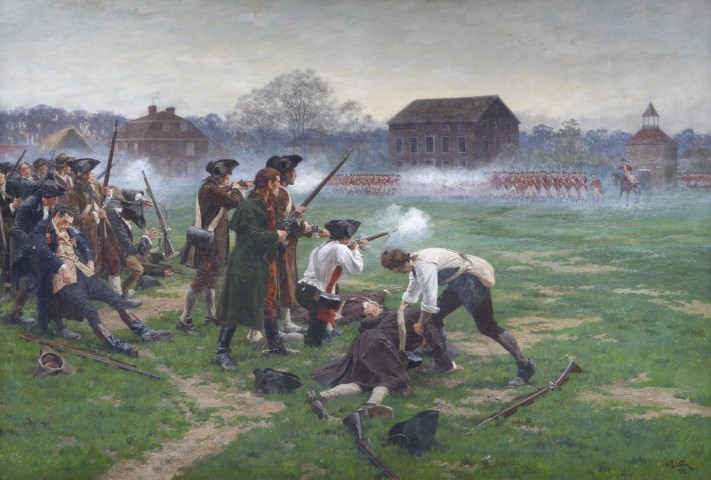
By April 1775, tensions between the British Empire and the American colonies had reached a breaking point. British authorities feared open rebellion and ordered troops to march from Boston to Concord, Massachusetts, to seize weapons and gunpowder believed to be stored by colonial militias. The goal was to prevent resistance before it could grow.
But the patriots were forewarned, and local militia mobilized to meet them.
On April 19, 1775, fighting broke out first in Lexington and then continued into Concord and along the road back toward Boston. Although it remains uncertain who fired the first shot, the clash became the first battle of the American Revolution, “the shot heard ‘round the world.”
Colonial forces resisted successfully and forced British troops into a difficult retreat toward Boston under continued attack.
The battle transformed political resistance into armed conflict, drew thousands of militia members from across New England, and helped lay the foundation for what would become the Continental Army. A year later, on July 4, 1776, the colonies declared independence and formed the United States of America. The war with England would last until 1781 with the surrender at Yorktown. The Treaty of Paris formally ended the American Revolution in 1783.
Hero
Paul Revere
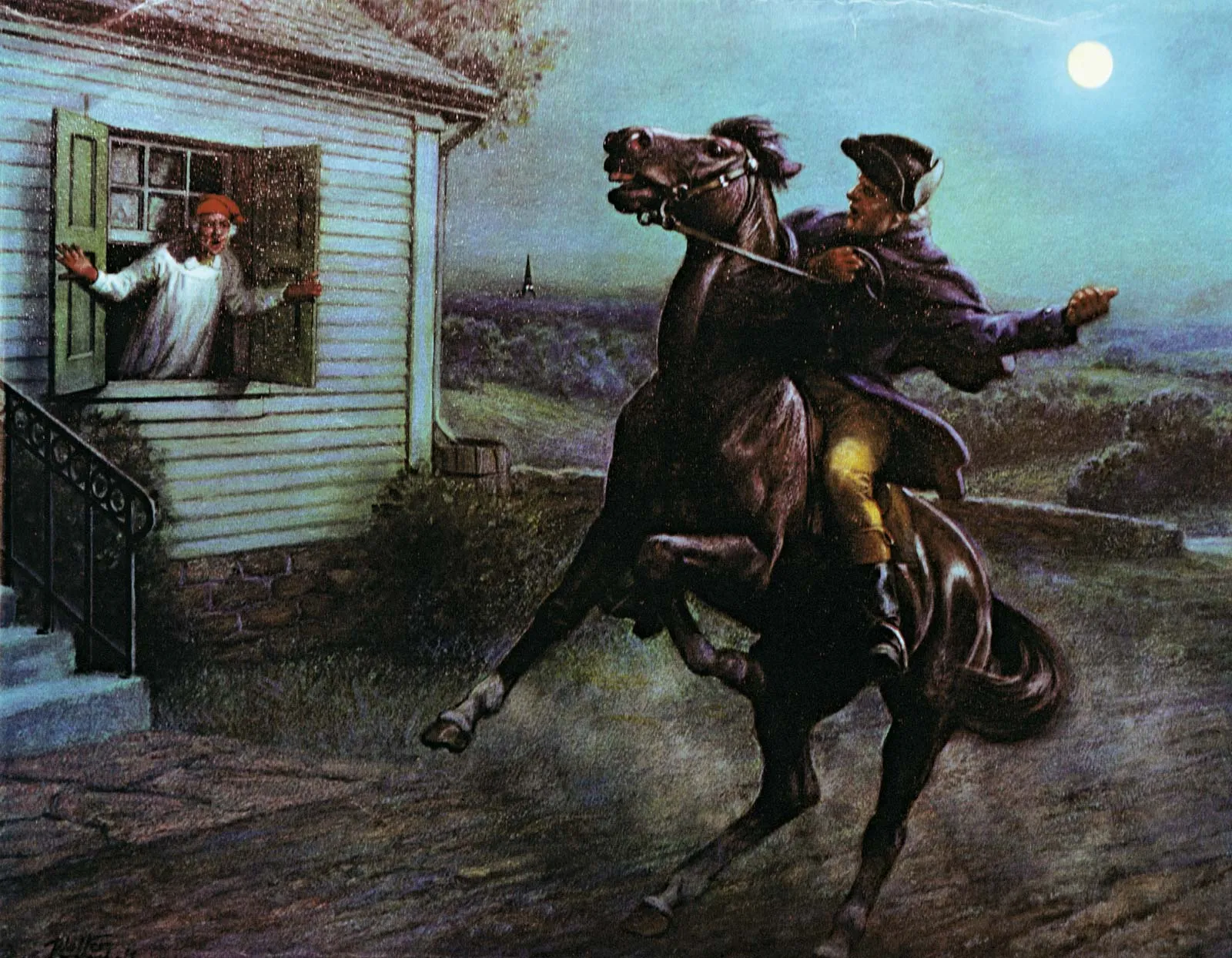
In 1774–1775, Paul Revere worked as an express rider for patriot groups in Massachusetts, carrying messages and intelligence between colonies.
On the evening of April 18, 1775, Revere was sent to Lexington with news that British troops were marching from Boston. Crossing the river to Charlestown, he borrowed a horse and rode through nearby towns warning local militia.
He reached Lexington shortly after midnight and delivered the message, helping colonists mobilize before British forces arrived.
His ride became one of the most recognized moments leading into the Battles of Lexington and Concord – the beginning of the American Revolution.
Technology
Lanterns as Colonial Alarm
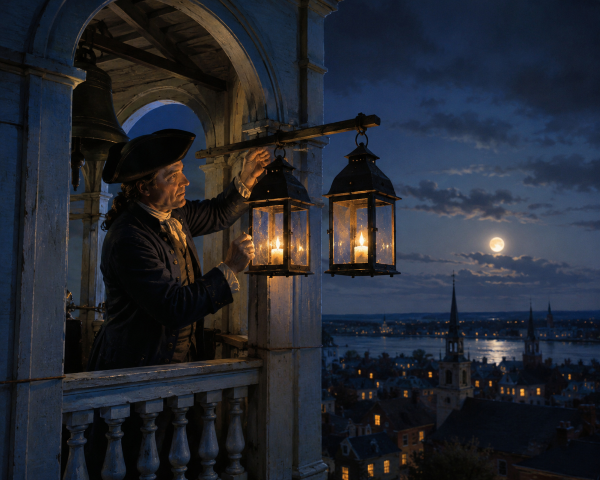
On the night of April 18, 1775, as British troops prepared to leave Boston, Paul Revere arranged for a signal to be displayed from the tower of Christ Church, today known as Old North Church.
The lanterns served as a predetermined signal to the colonists across the Charles River:
One lantern – British troops were leaving Boston by land
Two lanterns – British troops were crossing the river by boat;
Two lanterns were ultimately displayed. The signal was intended to alert local networks in case Revere was unable to leave Boston and deliver the warning himself.
View Spotlight
Battle
The Battle of Brandywine, fought on September 11, 1777, near Chad’s Ford, Pennsylvania, was the largest battle of the Philadelphia Campaign during the American Revolutionary War. The British won this battle, but ultimately, its strategic value was lost to them.
It was fought between General George Washington’s Continental Army and General Sir William Howe’s British forces. The British sought to capture Philadelphia, where the Continental Congress was based.
During the battle, General Howe divided his army into two columns. While one force advanced toward Brandywine Creek at Chad’s Ford, convincing Washington that the main attack would come there, Howe secretly led the larger portion of his army on a 17-mile march to cross the Brandywine at unguarded fords. The maneuver allowed the British to strike the American right flank by surprise, forcing Washington to abandon his defensive position and withdraw after fierce fighting.
Although the British achieved their immediate objective by capturing Philadelphia, the American fight for independence continued. The Continental Congress relocated to York, Pennsylvania, where it continued to govern, while Washington preserved the Continental Army and launched another major offensive at Germantown less than a month later. After spending the winter at Valley Forge, the strengthened Continental Army returned to the field. In June 1778, the British abandoned Philadelphia and withdrew to New York, returning the city to the patriots’ control.
Hero
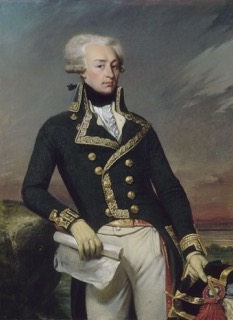
Marquis de Lafayette
At just 19 years old, the Marquis de Lafayette volunteered to fight for a cause that was not his own.
At the Battle of Brandywine on September 11, 1777, the young French nobleman saw combat for the first time. As the Continental Army was forced to retreat, Lafayette remained on the battlefield, helping to organize an orderly withdrawal under heavy British fire. During the action, he was shot through the calf but refused to leave until the retreat had been secured.His courage made a lasting impression on General George Washington, who soon entrusted him with command of a division of Continental troops.
Lafayette’s commitment did not end on the battlefield. That winter at Valley Forge, he shared the hardships of his soldiers, used his own money to purchase uniforms and muskets for them, and stood firmly by Washington during one of the most difficult periods of the Revolutionary War.
In 1779, Lafayette returned to France and used his influence with King Louis XVI and his ministers to press for greater French military support for the American Revolution. His efforts helped secure the dispatch of French General Rochambeau’s expeditionary force, which sailed for America in 1780 and played an important role in the Yorktown campaign.
Technology
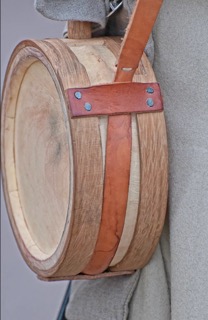
A Wooden Canteen
During the American Revolution, American soldiers carried wooden canteens to hold water while they were on the move. British and German troops often used canteens made from tin, but it was difficult to obtain metal in America.
Canteens were carried over the shoulder using a cord or thin leather strap. Two main styles were used. One was made from a thin strip of wood bent into a circular shape and attached to two wooden sides. The other resembled a small barrel, with several pieces of wood held together by wooden or iron bands. A small opening allowed the canteen to be filled and used for drinking, while a wooden plug closed the opening. Canteens were often painted to protect the wood and sometimes marked with a soldier’s initials, insignia, regiment, or company.
A wooden canteen held about three pints of water, while a soldier on the march required about six pints each day for drinking and cooking.
Wooden canteens were inexpensive, could be made from readily available materials, and helped prevent the water from heating as quickly as it would in metal containers. They remained common among American forces throughout the Revolutionary War, and some were still being used nearly 30 years later during the War of 1812.
View Spotlight
Battle
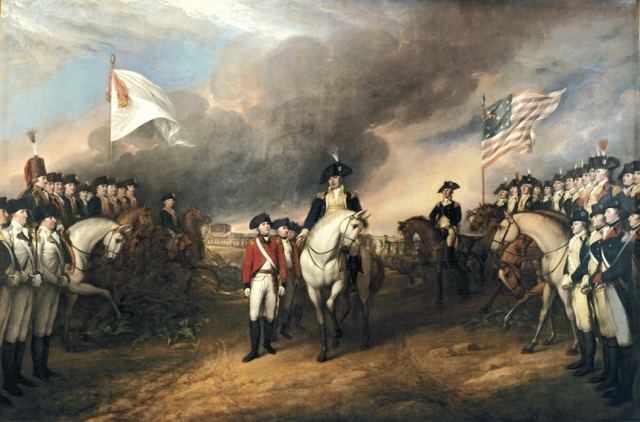
The Siege of Yorktown (September 28-October 19, 1781) was the final decisive moment in the Revolutionary War that made American independence possible.
7,500 British troops under the command of General Lord Conwallis were already weakened and retreating to Yorktown and the adjacent promontory of Gloucester. But their defensive position led to their demise.General George Washington directed the Marquis de Lafayette, who had 4,500 men, to prevent the British from escaping Yorktown by land. Meanwhile, Washington’s 2,500 Continental soldiers in New York were reinforced by 4,000 French troops under the Comte de Rochambeau. At the same time, a French fleet of 24 warships commanded by the Comte de Grasse established a blockade, effectively cutting Cornwallis from any support by sea.
By late September, nearly 14,000 American and French troops had surrounded Yorktown. Throughout early October, allied forces steadily captured British defensive positions and tightened the siege. Isolated, outnumbered, and running short of supplies, Cornwallis surrendered on October 19, 1781. Nearly 8,000 British soldiers were taken prisoner, along with about 240 artillery pieces.
As America commemorates its 250th anniversary, the story of the Siege of Yorktown reminds us that freedom has never been free.
Hero
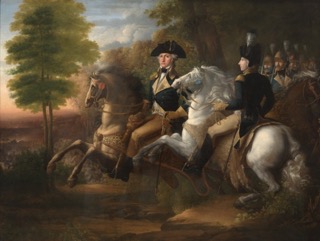
George Washington
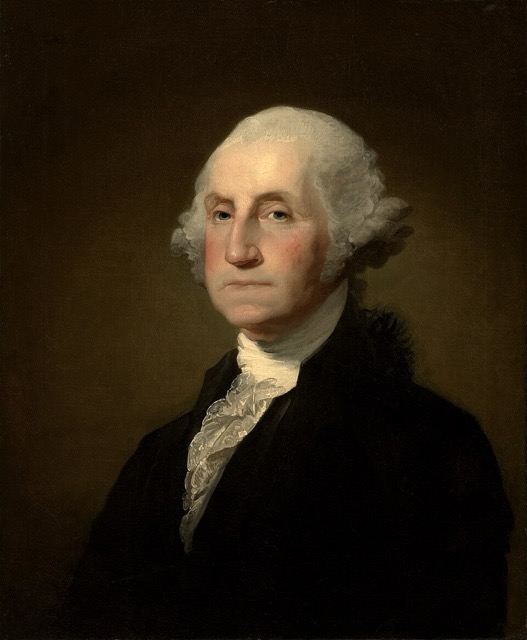
Born in Virginia in 1732, Washington gained experience as a surveyor and military officer during the French and Indian War. He later managed his Mount Vernon estate and served in the Virginia House of Burgesses before emerging as a leading voice against British policies.
In 1775, the Second Continental Congress appointed Washington Commander in Chief of the Continental Army. After six years of war and with critical French support, he secured victory over the British at Yorktown in 1781.
Following the proclamation of independence, Washington played a key role in establishing the new federal government and was unanimously elected the nation’s first President on April 30, 1789.
George Washington died on December 14, 1799. Americans mourned the loss of a leader whose service helped secure the nation’s independence and guide its earliest years.
Technology
The Lafayette Gun
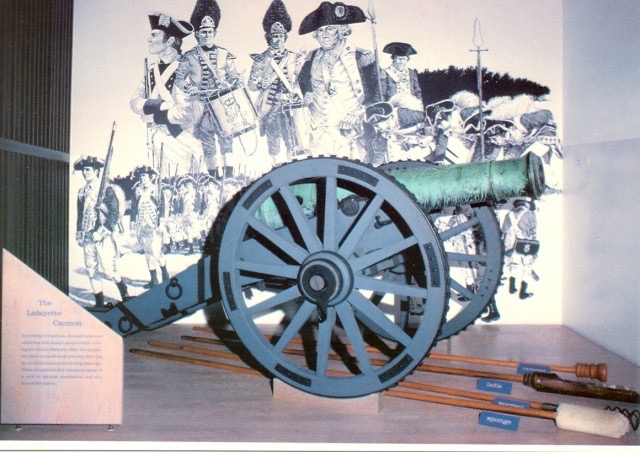
This British 12-pounder cannon was designed to breach fortifications with heavy projectiles. Captured by American forces during the Siege of Yorktown, it became one of the best-known artifacts of the American Revolution.
The gun had been damaged during the siege and was reportedly disabled when American troops captured the British position where it was located. After the British surrender, the cannon came into American possession and was later associated with the Marquis de Lafayette, who played a key role in the Yorktown campaign.
More than forty years later, during his return visit to the United States in 1824, Lafayette encountered the same cannon at Watervliet Arsenal. Recognizing the dented gun from Yorktown, he reportedly embraced it and called it “an old friend.” From that moment, the artifact became known as the Lafayette Gun.