Battle
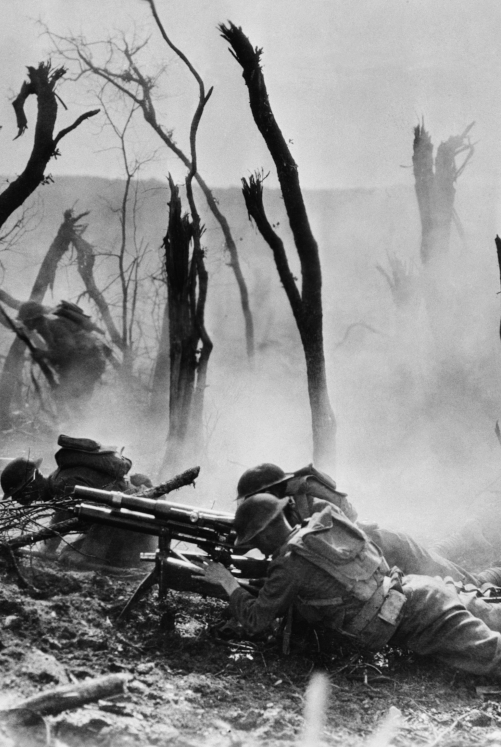
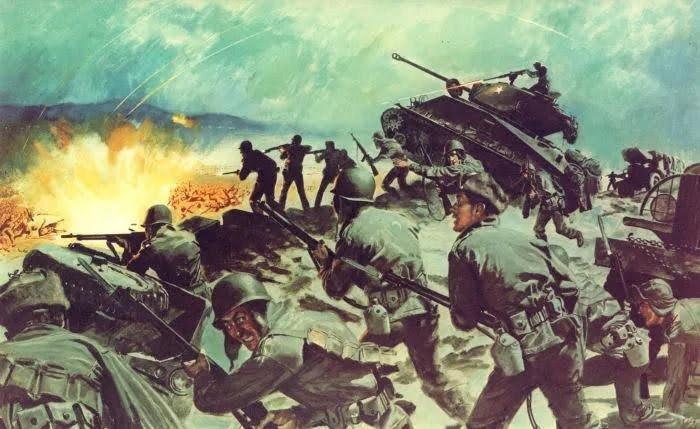
From February 11 to 15, 1951, China and North Korea launched a major offensive against United Nations troops in central Korea. The operation targeted Chip’yong-ni, a key road junction controlling movement through the region. On February 13, General Matthew Ridgway, commander of the U.S. Eighth Army, ordered the 23rd Infantry Regiment of the 2nd Infantry Division to hold Chip’yong-ni in order to secure the junction and stabilize the front. The regiment, numbering about 5,000 soldiers, was surrounded and resupplied exclusively by air. Between February 13 and 15, multiple Chinese divisions conducted repeated attacks on the regiment’s defensive perimeter, primarily at night. Fighting occurred at close range, and parts of the perimeter were temporarily penetrated. On February 15, UN infantry, Ranger units, artillery, tanks, and air support counterattacked, and relief forces from the 5th Cavalry Regiment reached the town. Chinese forces withdrew shortly afterward. U.S. casualties totaled 404, including 52 killed. Captured Chinese documents later indicated at least 5,000 Chinese casualties. This battle was important because it was the first major instance during the Korean War in which a Chinese offensive was stopped and reversed.
In the picture: U.S. Army illustration depicting the fourth day of battle. Courtesy of the US Army Center of Military History.
Hero
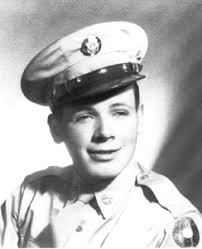
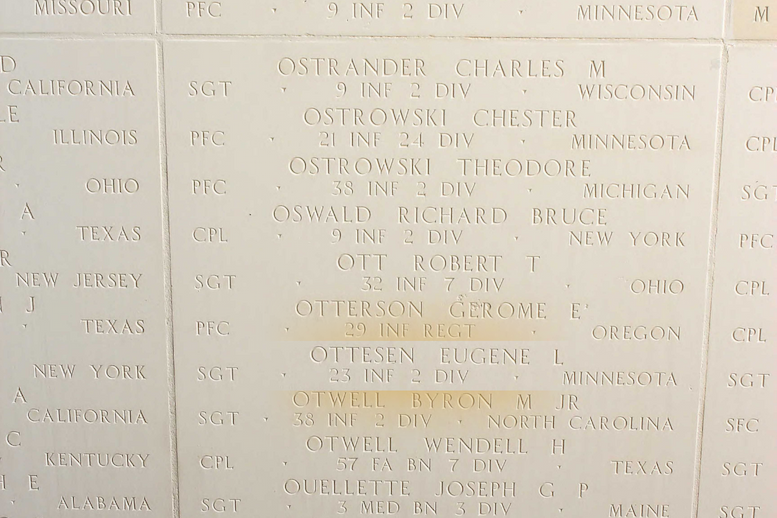
Sergeant Eugene Leonard Ottesen
On February 15, 1951, soldiers of the U.S. 23rd Infantry Regiment were locked in fierce combat at Chipyong-ni, South Korea.
Among those defending the perimeter was Sergeant Eugene Leonard Ottesen, a draftee from New Richland, Minnesota. As Company G withdrew under overwhelming enemy pressure, the gunner of his machine gun crew was wounded. Without hesitation, Sergeant Ottesen took control of the weapon. His fire was so effective that three Chinese assaults were driven back with heavy losses. Sergeant Ottesen remained at his position and continued to cover his company’s withdrawal despite overwhelming odds. His position was eventually overrun, and he was never seen again. Chinese forces were ultimately repelled. For his extraordinary gallantry, Sergeant Ottesen was awarded the Silver Star. He was declared dead in 1953 following the Korean War armistice. His name is inscribed on the Courts of the Missing at the ABMC Honolulu Memorial. “It is foolish and wrong to mourn the man who died. Rather, we should thank God such men lived” – General George S. Patton
Technology
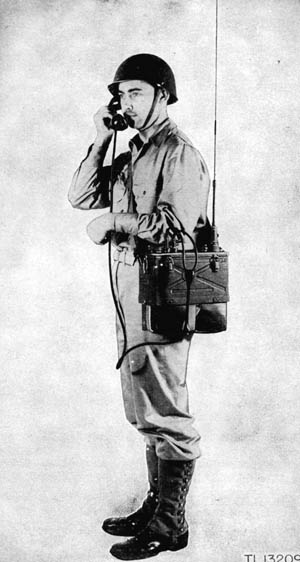
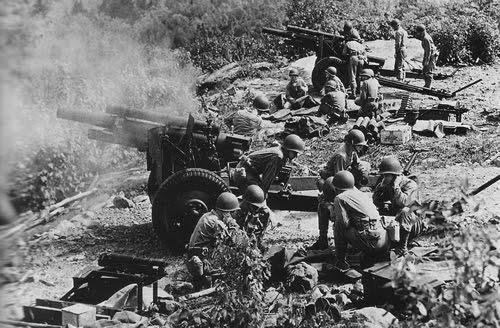
A key technology that helped the U.S. troops hold defensive lines during the Korean War was the 105mm howitzer – a mobile field artillery gun capable of firing high-explosive shells to a distance of more than six miles. American forward observers tracked the advancement of the enemy forces and used a field radio to inform the artillery unit. It was critical for the observers to provide the correct map grid, distance and direction. Then, artillery units aimed their 105mm howitzers at those coordinates and fired. Shells exploded near the advancing formations, breaking up concentrated attacks before they could reach the defensive perimeter. The high-explosive rounds disrupted enemy momentum, caused casualties, and forced attacking units to scatter and reorganize under fire. Developed by the U.S. Army Ordnance Department and adopted in the early 1930s, the M2 105mm howitzer was the standard U.S. divisional artillery piece used during World War II and the Korean and Vietnam Wars.